INBAR MAAYAN
  • Home
  • About
  • Research
  • CV & Publications
  • How To
Picture

​Evolution and phylogeography of Jamaican Anolis lizards

Picture
Photo cred - Javawney Crooks
Picture
"Species-for-species, the Jamaican radiation of anoles is the most fabulous"
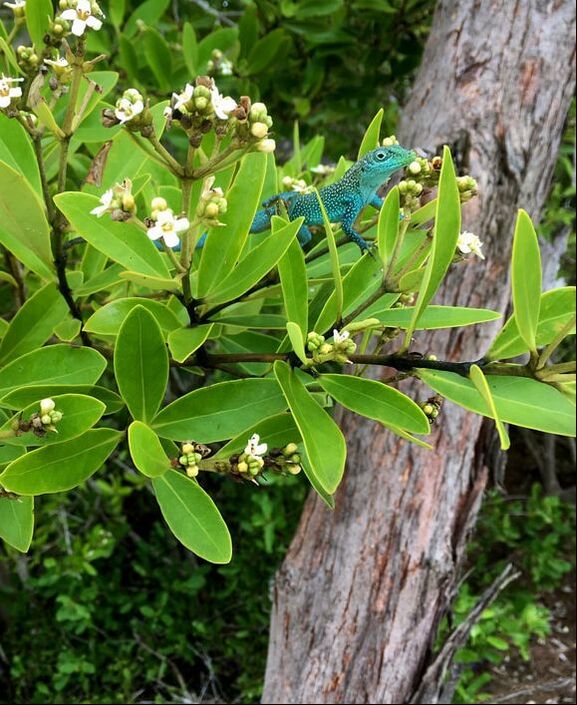
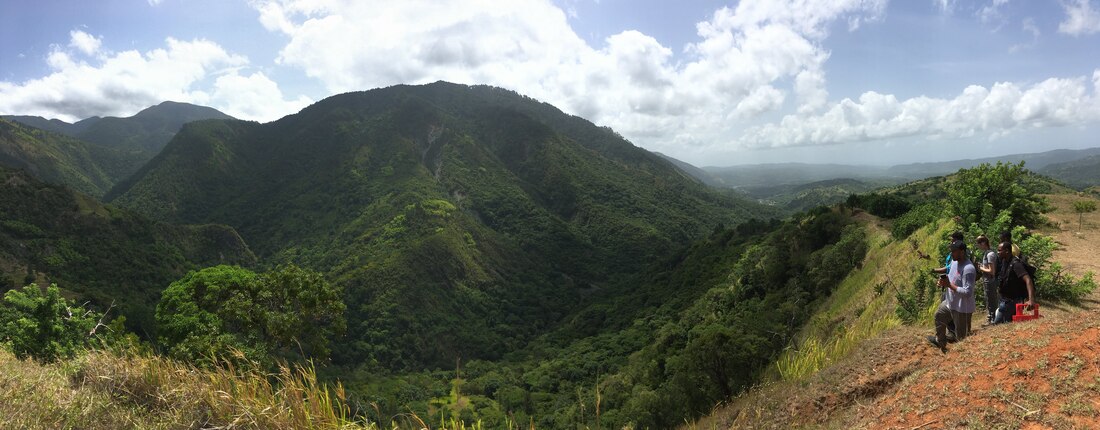
The overarching aim of my dissertation research is to map the distribution, species richness, and scope of variability of Jamaican Anolis in order to understand evolutionary patterns and processes shaping diversity in this clade. Six of the seven species occur solely in Jamaica, and five occur island-wide, each adapted to use a different part of the habitat. Despite decades of research that have made anoles a classic group for the study of ecology and adaptive evolution, we don't yet have a solid understanding of the relationships among lineages or of the evolutionary forces that have molded the lizard populations we see today.
By collecting genetic samples from multiple species at sites across the island, I'm mapping the relationships among populations and between species. I'm integrating these findings with morphological and ecological measurements to characterize lineages and to generate an accurate, up-to-date understanding of genetic and phenotypic variation and its distribution across the landscape. Using the data my team and I have collected -- and will collect -- I'm hoping to figure out just how many species of Anolis there are in Jamaica, which salient mechanisms have shaped their evolutionary trajectory, and whether these mechanisms are shared among multiple co-occurring species. As part of my research in Jamaica and in collaboration with the University of the West Indies, I am working to include, train, and empower future Jamaican biologists. 

My field research in Jamaica has been funded by the Harvard Museum of Comparative Zoology. Upcoming fieldwork and lab work is supported by a Graduate Student Research Award from the Society of Systematic Biologists, and by a National Geographic Society Exploration Grant (with J. Losos).

Species introductions as a window to evolution

Picture
Introduced (and invasive) species, while often disruptive to the biological communities they enter, can also present extraordinary opportunities to study evolution in action. Anoles are a great group for studying these community assembly dynamics in real time, and none more than the brown anole (Anolis sagrei). 
For example, until the arrival of the brown anole lizard in the 1980s, Grand Cayman was home to only the endemic Grand Cayman anole. I set out to assess if interactions with the brown anole have impacted the ecology of the endemic Grand Cayman anole, and to investigate whether this potential shift in ecology led to adaptive physical changes. I surveyed sites for the occurrence of both species, and measured habitat use and morphological traits that are related to habitat use. Building on this work, I will compare my modern-day measurements to measurements of museum specimens collected in the past to find out whether and how the Grand Cayman anole has changed over the duration of the brown anole’s presence on the island. During the course of this work, I also collected genetic samples from Grand Cayman anole populations across the island to use in my analysis of the Jamaican radiation of anoles (to which this species belongs) and to learn more about the evolutionary history and relationships of populations in Grand Cayman. 

Fieldwork for this project was funded by an Early Career Grant from the National Geographic Society.

Using genomic data to study population dynamics in sea lions

Picture
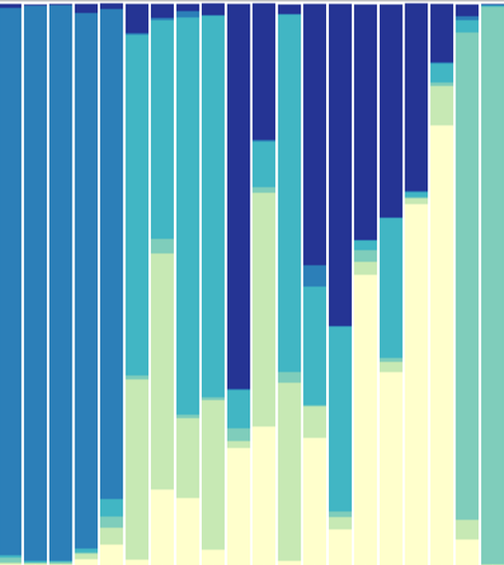
Working at Uppsala University with Jochen Wolf and Aaron Shafer, I used RAD-seq data to analyze the distribution of individuals and the flow of genetic information (in the form of mating) between them in two species of sea lion: Steller’s sea lion (Eumetopias jubatus) in the Northern Hemisphere and the Galápagos sea lion (Zalophus wollebaeki) in the Southern Hemisphere. Our analyses suggested that Steller’s sea lions are divided into two groups on either side of the 144° line of longitude, and that individuals from these groups rarely mate with each other. On the other hand, the data we collected for the Galápagos sea lions showed that the genetic relationships between individuals of this species are largely determined by swimming distance between the different rookeries; ecological factors also play a role, albeit a smaller one than distance, in the structuring of this species. It is important to understand such patterns not only for advancing our understanding of biology, but also to more effectively manage declining species. 
As part of this work, we also studies different analysis parameters to assess their influence on downstream findings and population genetic inferences. 

I completed this work during my Master's degree studies, which were funded by an ​Erasmus Mundus Joint Master Degree (EMJMD) Category A Scholarship from the European Union. 

​Correlates of strain diversity in Microsporidia species parasitizing Daphnia 

Picture
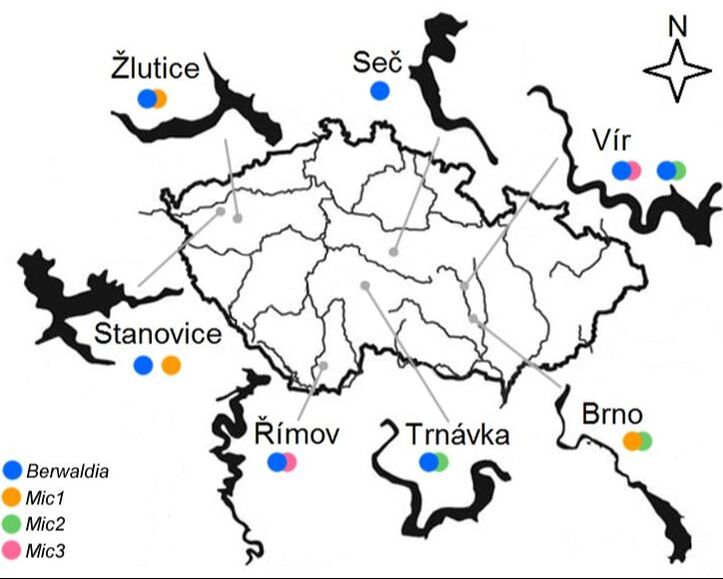
Working at LMU with Justyna Wolinska and Jakub Rusek, I examined the genetic diversity of parasites infecting hosts in the Daphnia longispina species complex, and analyzed this diversity in the context of host population structure. Because both single and concomitant parasitic infections are common in nature, (though each is characterized by its own set of evolutionary dynamics), we studied both types of infection using the Daphnia-Microsporidia host-parasite system to figure out which type generates greater intraspecific parasite diversity. In addition, we investigated the population genetic structure of the parasites to test for patterns of isolation-by-distance. in the course of this work, we generated abundance, richness, and diversity data for two species of Microsporidia infecting hosts in several Czech reservoirs. Gaining an appreciation for the dynamics of coinfection-- and how they differ from single infections --is valuable for understanding coevolution, for epidemiological research, and for clarifying transmission mode and parasite population structure. 

​I completed this work during my Master's degree studies, which were funded by an ​Erasmus Mundus Joint Master Degree (EMJMD) Category A Scholarship from the European Union.

Morphology and locomotion of Panamanian anoles

Picture
Photo cred - Ummat Somjee
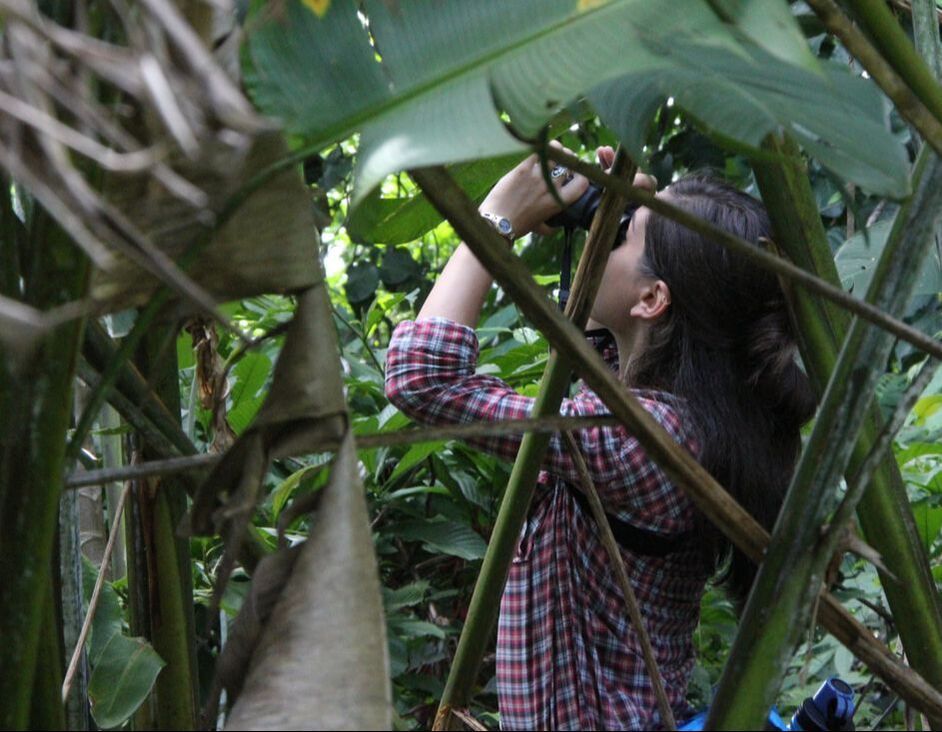
Anole lizards exhibit an incredible diversity of form and correlated function, a relationship best documented in the communities of the Greater Antilles. The summer before my senior year of college, I set out to investigate this relationship in three species of anoles from Panama, which each occupied a different habitat and also looked different. I studied escape behavior in Anolis apletophallus (a forest dweller), Anolis auratus (a grasslands dweller) and Anolis poecilopus (a stream-side dweller), documented each species' locomotor and habitat use patterns, and formed hypotheses about the morphological adaptation that would suit those habits. I then imaged and measured cleared and stained skeletal specimens of these three species to describe their limb traits. Taken together, these data showed that the mainland anoles I studied didn't quite fit the same niches as similar species in the Caribbean, but also that each differed from the other and those differences seemed to be related to the way they used their habitat. This project taught me that fieldwork and lab work can be hard and tedious, but that I love doing both and that I enjoy working toward solving bits and pieces of the puzzle of biology.
​
My fieldwork at the Gamboa facilities of the Smithsonian Tropical Research Institute in Panama was made possible by a Sigma Xi Scientific Research Society (ASU Chapter) Research Grant and an ASU School of Life Sciences Undergraduate Research Scholarship.

Factors underlying the evolution of a display color polymorphism 

Picture
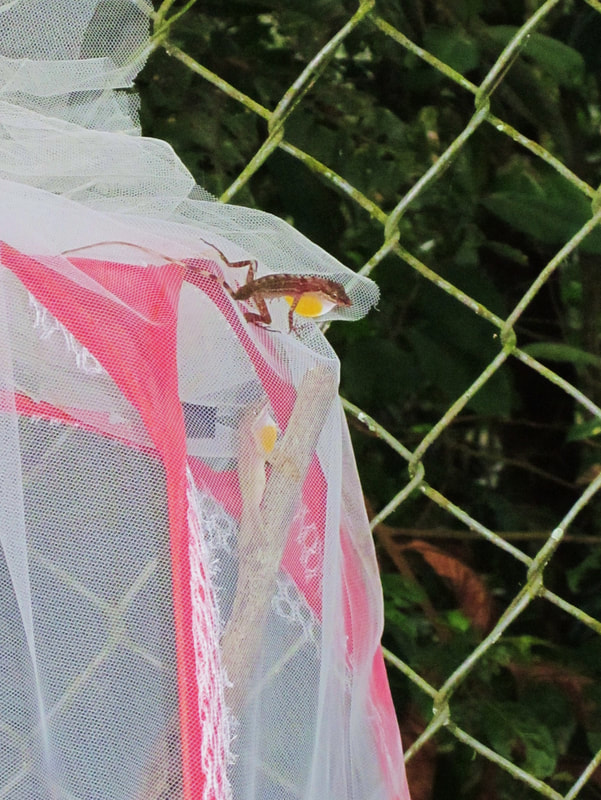
 As an a summer research intern at the Smithsonian Tropical Research Institute in Panama, I worked with Jess Stapley on her multifaceted quest to explain a puzzling dewlap color polymorphism in the Panamanian anole Anolis apletophallus. The males of A. apletophallus exhibit two distinct types of dewlap coloration: a solid orange dewlap, and a white dewlap with a basal orange spot. However, there appears to be no significant genetic difference between the two types. These morphs also live in separate habitats, and appear to coexist only in a relatively small overlap between their ranges. Within the scope of the larger project, I conducted staged behavioral experiments to assess whether there is an aggression bias between the morphs. By presenting a given male with a size matched opponent of either same or opposite-morph dewlap, I tested whether males preferentially displayed signs of aggression toward other males. I video recorded the staged contests, counting every instance at which males displayed, to analyze whether the focal male showed more aggression toward one of the stimulus males, and whether that aggression was biased based on the opponent’s dewlap color. To the the biological relevance of these display-only experiments, I also paired each lizard with one of its opponents and recorded the outcome of the encounter. While I found no clear difference in aggression bias, my direct encounter experiments suggested that ​dewlap displays alone may determine dominance in male-male interactions.

My participation in this REU was made possible by a ​Virginia M. Ullman Foundation Summer Research Grant.
© 2021 | Inbar Maayan
  • Home
  • About
  • Research
  • CV & Publications
  • How To